
In the late fall of 1988 the internet was a very small and quiet place. It was mostly just scientists and military researchers sending simple text messages to each other. There were only about sixty thousand computers connected to the entire network. A young graduate student at Cornell University named Robert Tappan Morris got very curious about exactly how big this digital world really was. He decided to write a tiny piece of code to travel around and count the machines. He did not mean to destroy anything. He just wanted to draw a map.
A Massive Math Mistake

The code was designed to be totally invisible. It was supposed to sneak onto a computer and check if it was already there. If the machine was clean the program would install itself and quietly look for the next computer. But Morris knew some smart system administrators might try to trick his code. They could program their computers to lie and say they were already infected just to keep his software away.
To beat this trick he added a special rule. He told his code to copy itself one out of every seven times even if the computer claimed it was already infected. That single tiny instruction turned a harmless counting tool into an absolute digital monster.
The Digital Tsunami

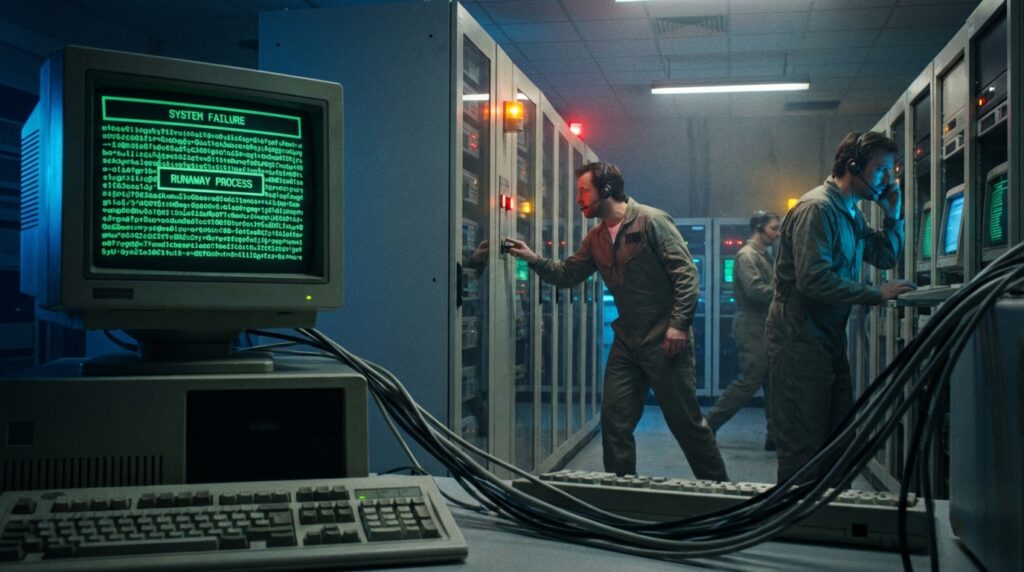
The program escaped his lab and hit the network. The one in seven rule caused the code to duplicate like crazy. Computers were getting infected over and over again. The machines tried to run dozens of copies of the exact same program at the exact same time. They totally ran out of memory. Everything slowed down to a painful crawl. Within hours emails stopped sending. Major universities and top secret government research labs watched their expensive screens freeze completely.
The smartest tech people in the country had absolutely no idea what was happening. They thought the country was under a massive coordinated cyber attack. Pure panic set in.
The Unread Apology

Back at Cornell the young student realized his massive mistake. He saw the network collapsing and completely freaked out. He asked a friend at Harvard to send out an anonymous message telling everyone how to kill the bug. But the internet was so completely jammed with his runaway code that his apology email could not even get through the pipes.
To stop the spread administrators had to physically pull the thick cables out of the walls. They split the early internet into tiny disconnected islands just to survive the flood. The damage took days to clean up and cost millions of dollars to fix. Morris ended up becoming the first person ever convicted under a brand new federal computer hacking law. He created the first major cyber disaster by total accident just because he wanted to count the computers.
References: You can read the full breakdown of how this tiny code crashed the system over at Smithsonian Magazine.