
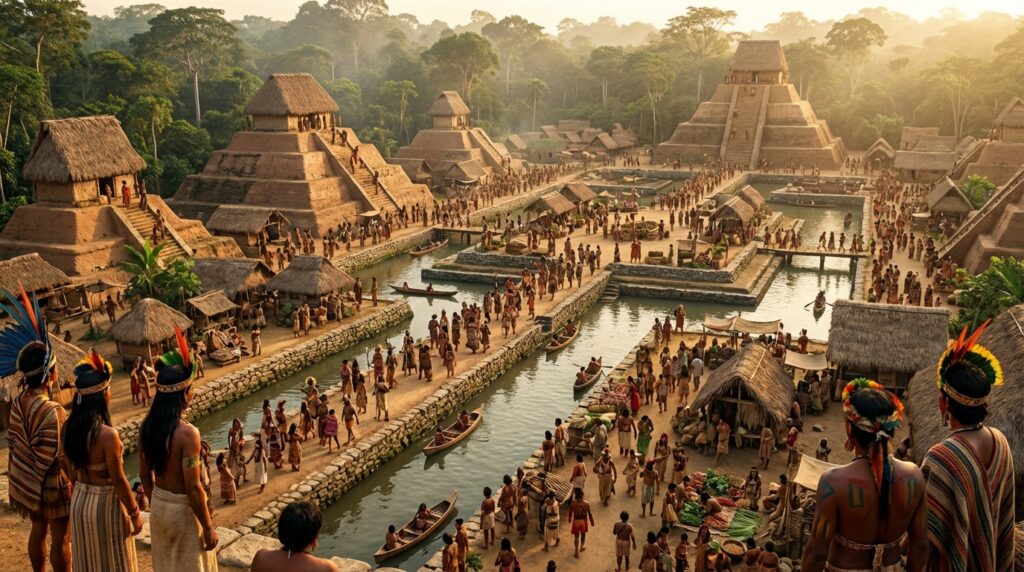
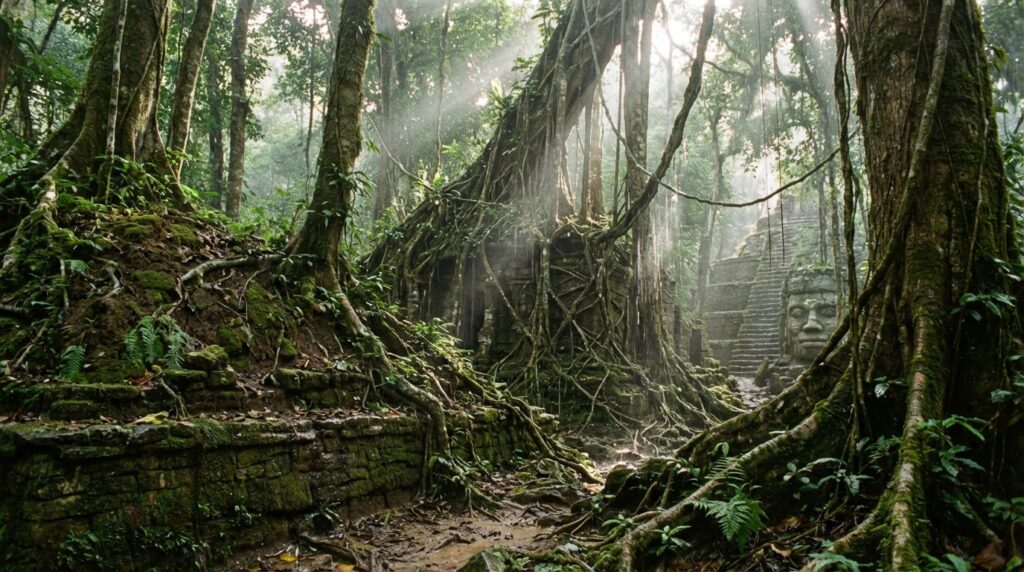
For centuries, the Amazon rainforest has been seen as a pristine, untouched wilderness, home to nomadic tribes but not vast, complex civilizations. The dense canopy and challenging terrain seemed to swallow any evidence of ancient urban life, leading many to believe that large-scale societies simply couldn’t thrive there. But what if everything we thought we knew about the Amazon’s past was wrong? What if beneath that impenetrable green blanket lay the ruins of sophisticated cities, hidden for thousands of years?
Prepare to have your mind blown, because recent archaeological breakthroughs are rewriting history, revealing that the Amazon was once home to sprawling urban networks that rivaled some of the world’s most famous ancient cultures.
Jungle’s Best-Kept Secret
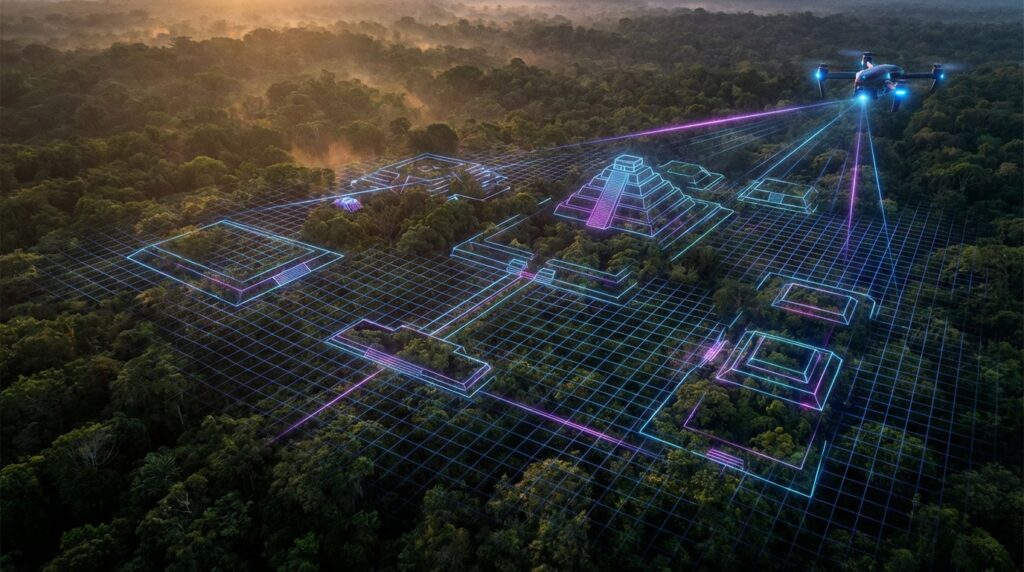
The biggest game-changer in this incredible discovery isn’t a shovel or a pickaxe, but rather a revolutionary technology called LiDAR (Light Detection and Ranging). Mounted on aircraft, LiDAR systems fire millions of laser pulses at the ground. These pulses penetrate the dense foliage, mapping the terrain beneath with astonishing precision. The result? A digital X-ray of the jungle floor, revealing structures that have been invisible to the human eye for millennia.
Thanks to LiDAR, archaeologists are now peeling back the layers of time, uncovering vast networks of roads, plazas, ceremonial platforms, and even entire residential areas that were once bustling cities. These aren’t just small villages; we’re talking about sophisticated urban planning on an epic scale.
A City Older Than Rome?
One of the most breathtaking discoveries came to light in Ecuador’s Upano Valley. What was once thought to be a collection of isolated mounds is now understood to be an intricate urban landscape dating back at least 2,500 years – making it over a thousand years older than any other known complex Amazonian society.
Imagine a network of cities connected by perfectly straight roads, some stretching for miles, flanked by drainage ditches and agricultural fields. This wasn’t a haphazard collection of settlements; it was a meticulously planned society that thrived for over a thousand years, supporting tens of thousands of people. The scale and complexity of these findings challenge the long-held belief that the Amazon could not sustain large, sedentary populations.
Bolivia’s Casarabe Culture
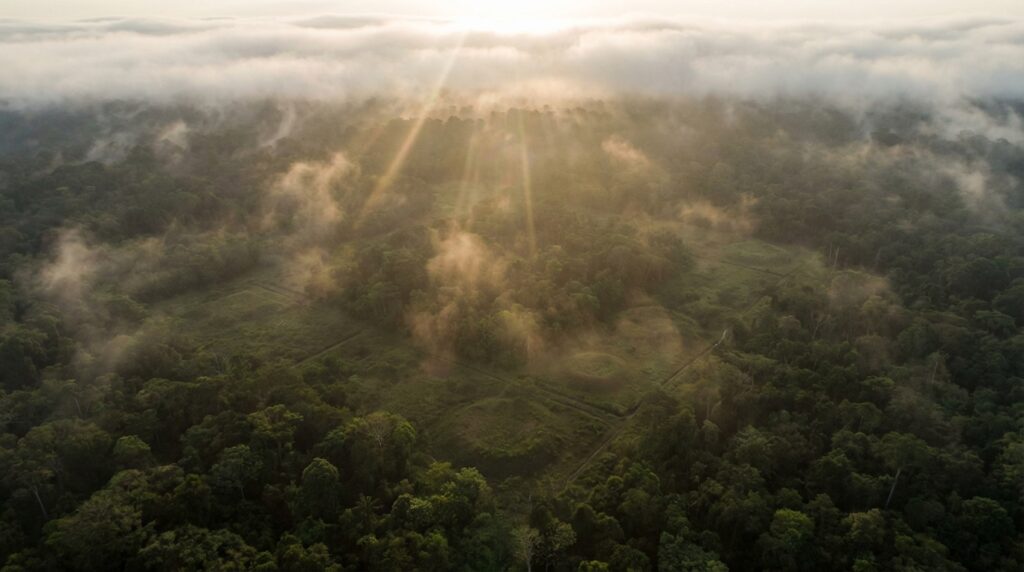
Further south, in the Bolivian Amazon, LiDAR has unveiled another astonishing civilization: the Casarabe culture. Here, archaeologists have mapped a sprawling network of settlements, including massive ceremonial centers with towering pyramids, plazas, and intricate water management systems.
These ancient Amazonians were masters of their environment, constructing canals, reservoirs, and raised fields to control water and cultivate crops in a region prone to seasonal flooding. Their ability to adapt and thrive in such a challenging landscape speaks volumes about their ingenuity and social organization. The Casarabe culture flourished between 500 AD and 1400 AD, leaving behind a legacy of monumental earthworks that are only now being fully appreciated.
Rewriting History, One Laser Pulse at a Time
The discovery of these lost Amazonian cities is more than just an archaeological triumph; it’s a profound shift in our understanding of human history. It proves that the Amazon was not just a wild frontier, but a cradle of innovation and complex societies, just like the ancient civilizations of Egypt, Mesopotamia, or Mesoamerica. These findings force us to reconsider the capabilities of ancient peoples and the incredible diversity of human development across the globe.
What other secrets does the vast Amazon still hold? As technology advances and more of the rainforest floor is mapped, we can only imagine the further wonders waiting to be revealed. The story of the Amazon’s lost cities is far from over, and each new discovery promises to be even more astonishing than the last.