
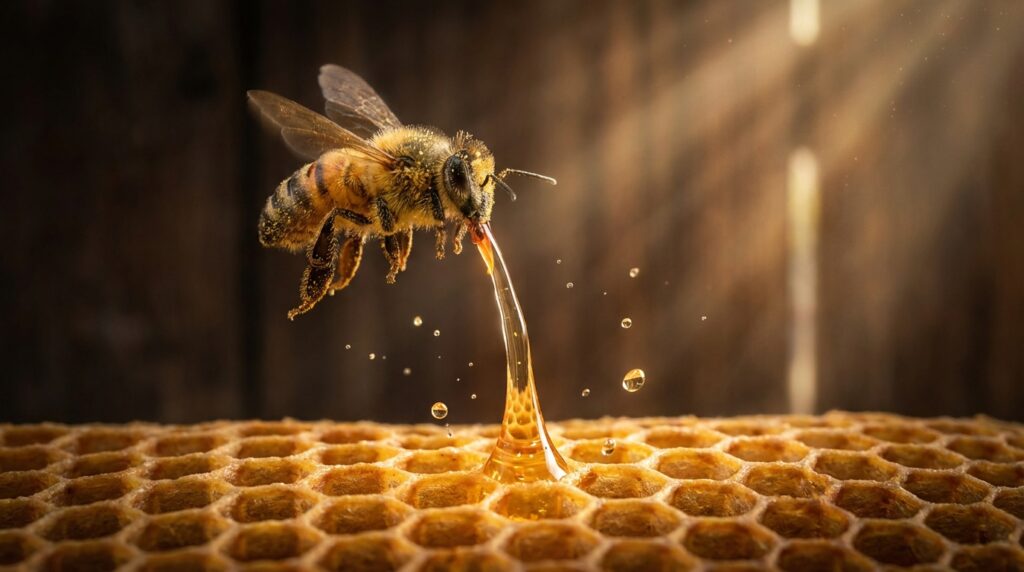
We love to drizzle it over warm biscuits, stir it into our morning tea, and use it to soothe a scratchy throat. Honey is often marketed as the ultimate pure and natural health food. It has a beautiful golden glow and a perfect floral sweetness. But if you actually trace that sticky syrup back to its true origin, the manufacturing process is a little bit stomach-turning.
People often joke that honey is just bee vomit. While that sounds like a gross exaggeration meant to ruin your breakfast, it is actually incredibly close to the biological truth.
To turn watery flower juice into thick, shelf-stable syrup, a bee has to swallow it, mix it with its own internal bodily fluids, and then literally throw it back up.
The Secret of the Second Stomach
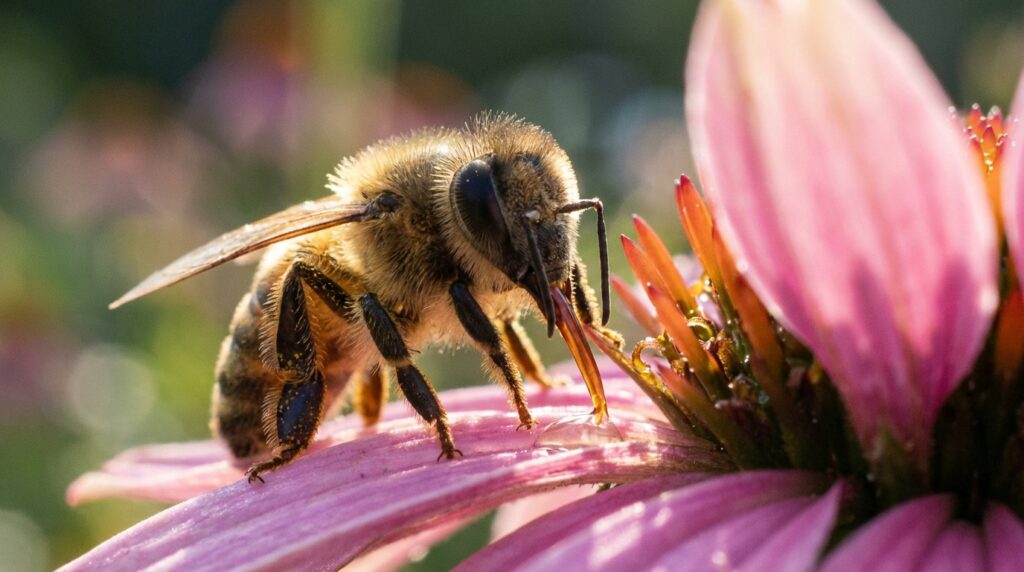
The process starts when a worker bee lands on a blooming flower. She uses her long, tube-like tongue to suck up the sugary liquid nectar hidden inside the petals. But she does not send this nectar into her regular digestive system to be used as food.
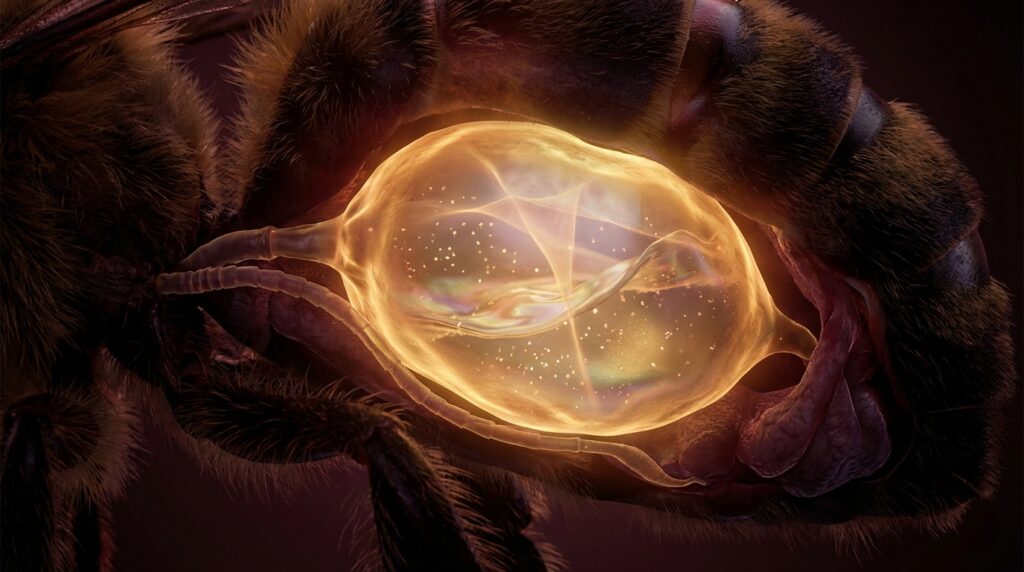
Bees are brilliantly engineered with two completely separate stomachs. They have a regular stomach for digesting their own meals, and a specialized storage pouch called a honey stomach (or crop). This second stomach is basically just an internal biological backpack. It can expand to hold a massive amount of nectar, sometimes weighing almost as much as the bee itself.
Once her honey stomach is completely full, she flies back to the hive carrying her heavy, sloshing cargo.
An Internal Chemical Factory
While the bee is flying home, the nectar isn’t just sitting idle. Her honey stomach secretes specialized digestive enzymes that immediately mix with the flower nectar.
This is where we have to gently correct the “vomit” myth. True vomit implies that the food was partially digested in the main stomach and then violently expelled due to illness. Because the nectar stays completely isolated in this specialized storage crop and is intentionally processed, it is more like an internal mixing bowl than actual sick vomit.
The enzymes start breaking down the complex sugars in the nectar into simpler sugars, making it easier for the colony to digest later and helping prevent bacteria from growing.
The Regurgitation Chain
When the forager bee finally makes it back to the hive, the real teamwork begins. She opens her mouth and physically regurgitates the enzyme-rich nectar directly into the mouth of a waiting indoor worker bee.
This indoor bee then “chews” the liquid for about half an hour, adding even more of her own enzymes to the mix, before throwing it back up and passing it to another bee. This bizarre game of regurgitation telephone slowly reduces the water content of the nectar.
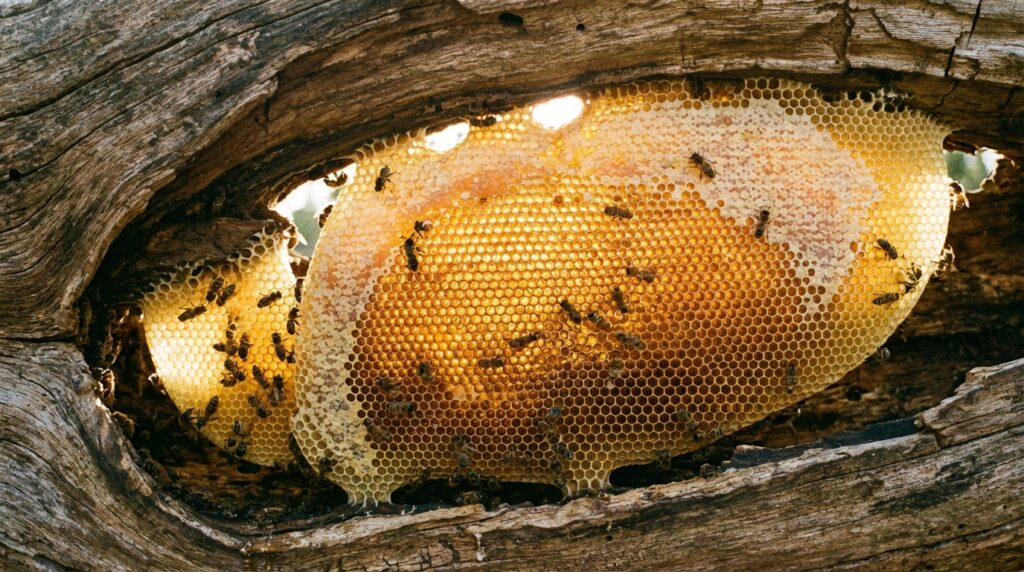
Finally, the last bee in the chain spits the processed syrup into the hexagonal wax honeycomb. The entire hive then works together to fan the liquid with their wings, evaporating the remaining water until it thickens into the perfect golden honey we know and love. They cap it with wax, sealing it away for winter.
So, while it is technically a heavily processed chain of insect regurgitation, it is also an absolute masterpiece of natural chemistry. The next time you squeeze that plastic bear bottle, just try not to think too hard about the journey it took to get there.
References: Live Science, Scientific American, Discover Magazine