
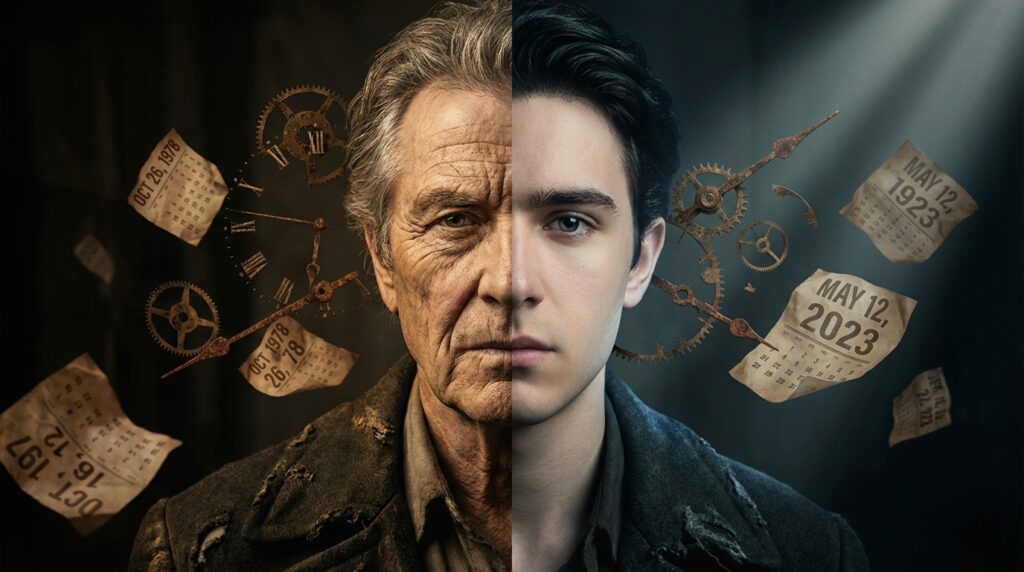
From the Epic of Gilgamesh to the Fountain of Youth, humanity has been obsessed with one ultimate dream: to conquer death. For millennia, immortality was the stuff of myths, legends, and whispered fantasies. But what if science is on the verge of turning that fantasy into a potential reality? What if the question is no longer if we can extend our lives, but how – and for how long?
We are living in an unprecedented era of biological discovery. Scientists are not just treating the diseases of old age; they are targeting the aging process itself. From “zombie cells” and chromosomal clocks to cryonic suspension and digital consciousness, the quest for immortality has moved from the realm of fiction into the world’s most advanced laboratories. But as we stand on this precipice, we must ask: even if we can live forever, should we?
Hacking the Code of Aging
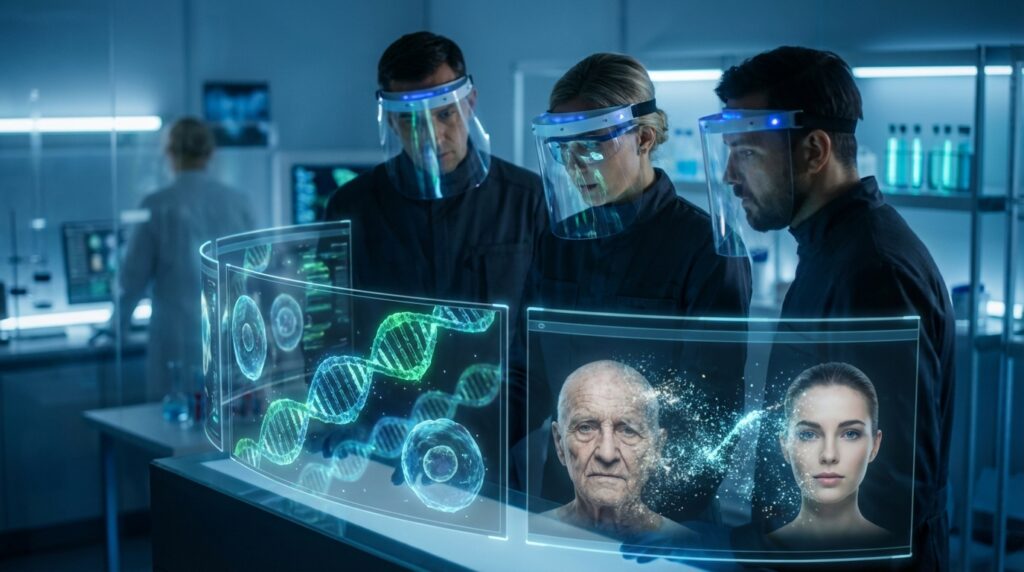
To understand how we might stop aging, we first have to understand why it happens. Aging isn’t a single event, but a complex accumulation of damage at the molecular and cellular level. For decades, this process was seen as an inevitable consequence of life. Now, a new generation of scientists sees it as a condition that can be treated, managed, and perhaps even reversed. Here are some of the most exciting frontiers in anti-aging research:
1. Clearing Out the Cellular Zombies
As we age, some of our cells enter a state called senescence. They stop dividing but refuse to die, earning them the nickname “zombie cells.” These senescent cells linger in our tissues, secreting a cocktail of inflammatory signals that damage healthy neighboring cells and contribute to a host of age-related diseases, from arthritis to Alzheimer’s.
Enter senolytics, a groundbreaking class of drugs designed to selectively seek out and destroy these zombie cells. In animal studies, clearing out senescent cells has led to dramatic improvements in health and lifespan, reversing signs of aging and delaying the onset of disease. Human trials are now underway, and while still in the early stages, senolytics represent one of the most promising strategies for extending our “healthspan” – the number of years we live in good health.
2. Rewinding the Cellular Clock
At the end of each of our chromosomes are protective caps called telomeres. Every time a cell divides, these telomeres get a little bit shorter. Think of them as the plastic tips on a shoelace that fray over time. When the telomeres become too short, the cell can no longer divide and becomes senescent or dies. This steady shortening acts as a kind of cellular clock, ticking down our lifespan.
But what if we could rewind that clock? In 2009, a discovery by scientist Shinya Yamanaka revolutionized the field. He found that just four specific proteins, now known as the Yamanaka factors, could revert an adult cell all the way back to a pluripotent stem cell – a state of youthful potential. This process, called cellular reprogramming, is like a factory reset for our cells. While applying this to a whole human is incredibly complex and risky (it could cause cancer), researchers are experimenting with short-term, partial reprogramming to rejuvenate tissues without the risks, with some success in mice.
Plan B: Putting Life on Pause with Cryonics
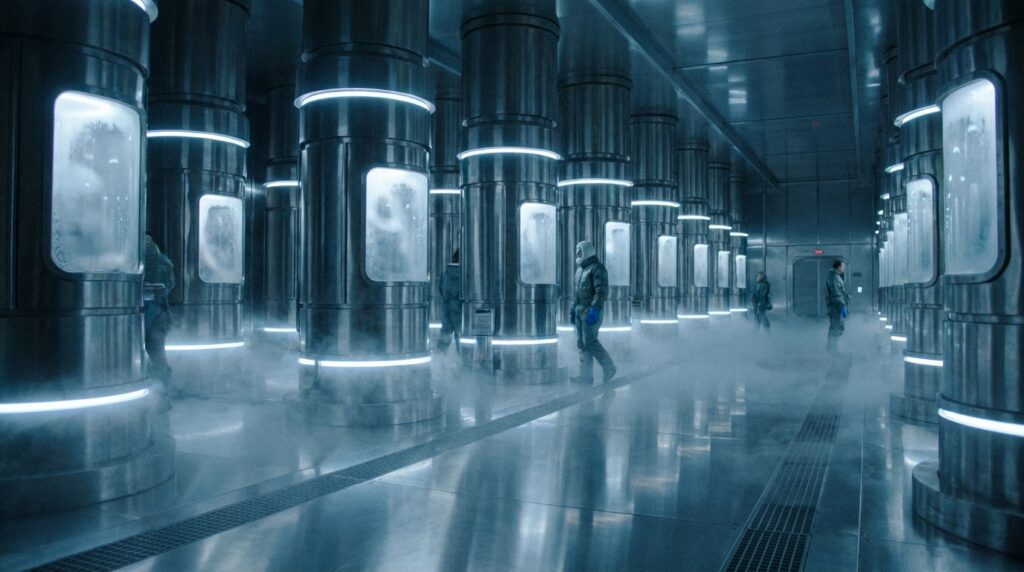
What if medical science can’t save you today, but might be able to in 50 or 100 years? This is the core premise of cryonics. It’s not about freezing the dead, but about preserving the critically ill for a future when technology is advanced enough to repair the damage and bring them back.
Contrary to the sci-fi image of being frozen in a block of ice, modern cryonics uses a process called vitrification. The patient’s blood is replaced with a cryoprotectant solution – a kind of medical-grade antifreeze – and the body is cooled to around -196°C (-320°F). This turns the tissues into a glass-like state, avoiding the formation of damaging ice crystals.
Organizations like the Alcor Life Extension Foundation in Arizona currently have over 200 patients in cryopreservation, waiting for a future revival that is, for now, purely theoretical. The challenges are immense: we don’t yet know how to reverse the damage from the preservation process itself, let alone cure the original cause of death. Cryonics is a bold, expensive gamble on a future that may never come.
The Ghost in the Machine
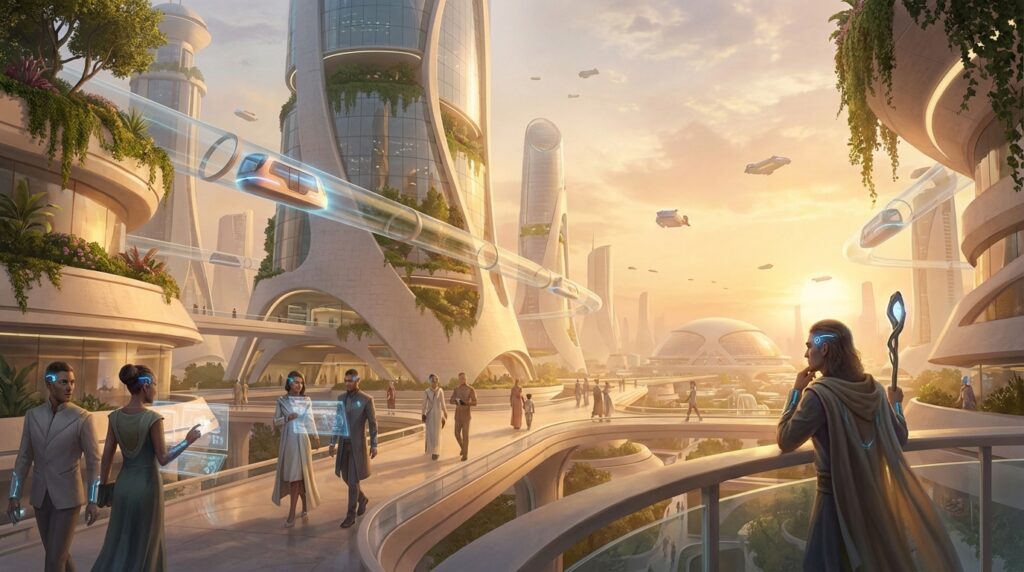
Perhaps the most radical idea is to leave the frailties of our biological bodies behind altogether. Mind uploading, a staple of transhumanist thought, proposes that we could one day scan the entire structure of a human brain and replicate it in a digital substrate. Your consciousness, memories, and personality would live on as a computer simulation, free from disease and decay.
This concept raises profound philosophical questions. Would a digital copy of your mind truly be you, or just a perfect imitation? What would it mean to exist as pure information? While the technology to achieve this is still firmly in the realm of science fiction, it represents the ultimate endpoint of the quest to separate identity from biology.
A Heaven or a Hell?
The science is fascinating, but the ethical and philosophical implications are staggering. If we conquer aging, what kind of world would we create?
- Overpopulation and Inequality: Who would get access to these life-extending treatments? If they are only available to the wealthy, it could create a biological schism in humanity – a mortal working class serving an immortal elite. And what would happen to a planet with a population that never stops growing?
- The End of Progress? Would society stagnate if the same generations held power for centuries, resistant to new ideas and change? Or would the wisdom of immense age lead to a more stable, thoughtful world?
- The Meaning of Life: Our mortality shapes everything about us – our urgency, our love, our creativity, our desire to leave a legacy. If life has no end, does it lose its meaning? Would an endless existence become an unbearable burden?
The quest for immortality forces us to confront our deepest fears and desires. While the science is still young, the questions it raises are as old as humanity itself. We may be the first generation to see the dream of eternal life take its first concrete steps toward reality. The challenge will be to ensure that in our quest to conquer death, we don’t lose what makes life worth living.
References
GlobalRPh | Healthspan | Life Extension | bioRxiv | HowStuffWorks | Wikipedia