
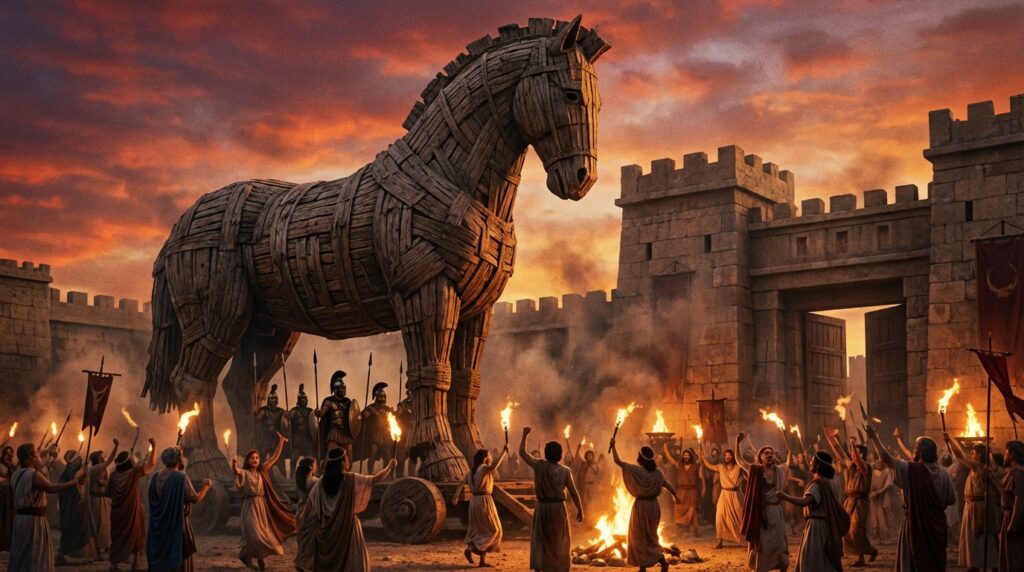
Few stories from antiquity capture our imagination quite like the Trojan Horse. The image of Greek soldiers hidden inside a colossal wooden horse, smuggled into the impenetrable city of Troy, leading to its ultimate downfall, is etched into our collective consciousness. But how much of this epic tale is true, and what does archaeology really tell us about this legendary stratagem?
Was There Even a Trojan War?
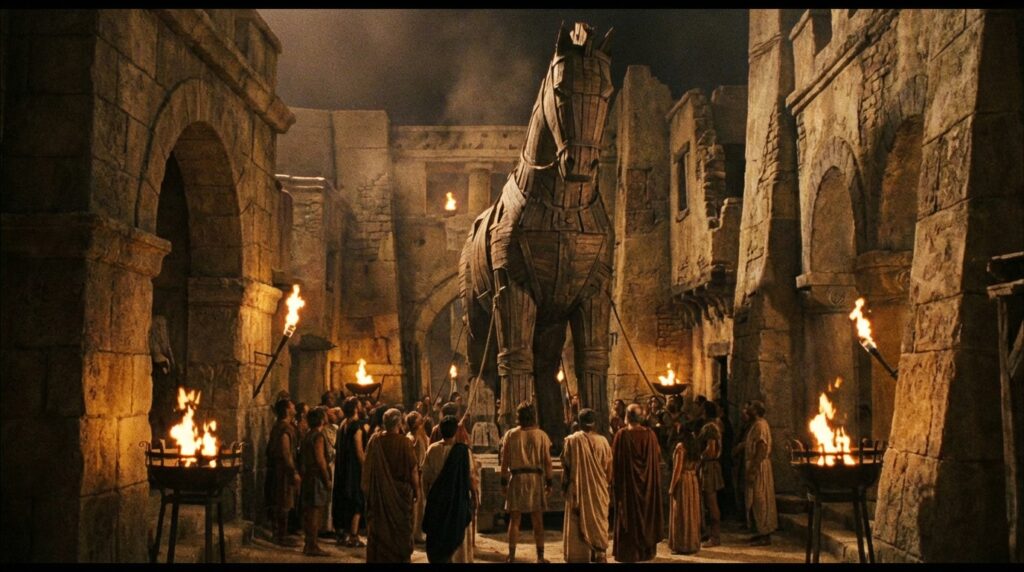
Before we tackle the horse, let’s address the war itself. For centuries, many believed the Trojan War, as told in Homer’s Iliad, was pure fiction. However, archaeological discoveries in the late 19th century by Heinrich Schliemann, and subsequent excavations, have confirmed that a city matching ancient descriptions of Troy (modern-day Hisarlık in Turkey) did indeed exist.
Evidence suggests that Troy VI and VIIa, layers of the city dating to the Late Bronze Age (around 1300-1180 BC), suffered significant destruction, including signs of fire and conflict, around the time the legendary war would have taken place. So, while the details of Helen and Achilles might be poetic embellishments, the idea of a major conflict at Troy is supported by solid archaeological findings.
The Horse: Myth or Masterpiece of Deception?
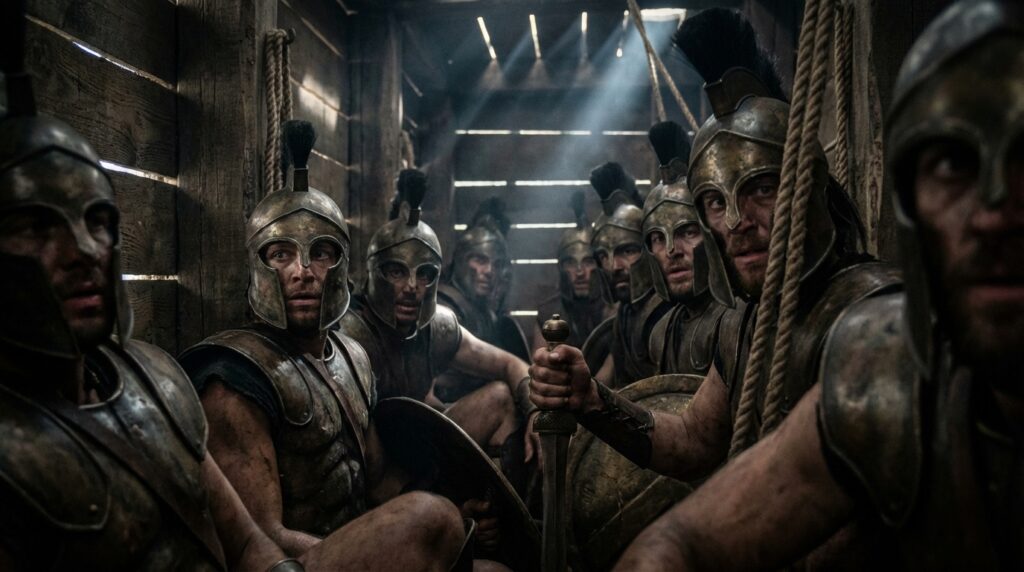
Now, for the star of the show: the Trojan Horse. Most historians and archaeologists agree that a literal giant wooden horse filled with soldiers is highly unlikely. The logistics of building such a structure in secret, moving it, and then having it accepted by the Trojans stretch credulity. Instead, many theories propose that the Trojan Horse was a metaphor or a misunderstanding of ancient terms.
One popular theory suggests the “horse” was actually a siege engine – a massive, horse-shaped battering ram or tower used to breach city walls. Ancient warfare often employed such devices, and it’s plausible that Homer or later storytellers transformed a formidable piece of military technology into a more dramatic, symbolic wooden animal.
Another intriguing idea, championed by some scholars, is that the “horse” refers to a ship. In ancient Greek, the word hippos could mean both “horse” and a type of Phoenician ship adorned with horse-head prows. The idea is that the Greeks might have sailed a ship (or ships) close to the city, perhaps disguised or under false pretenses, allowing soldiers to disembark and infiltrate.
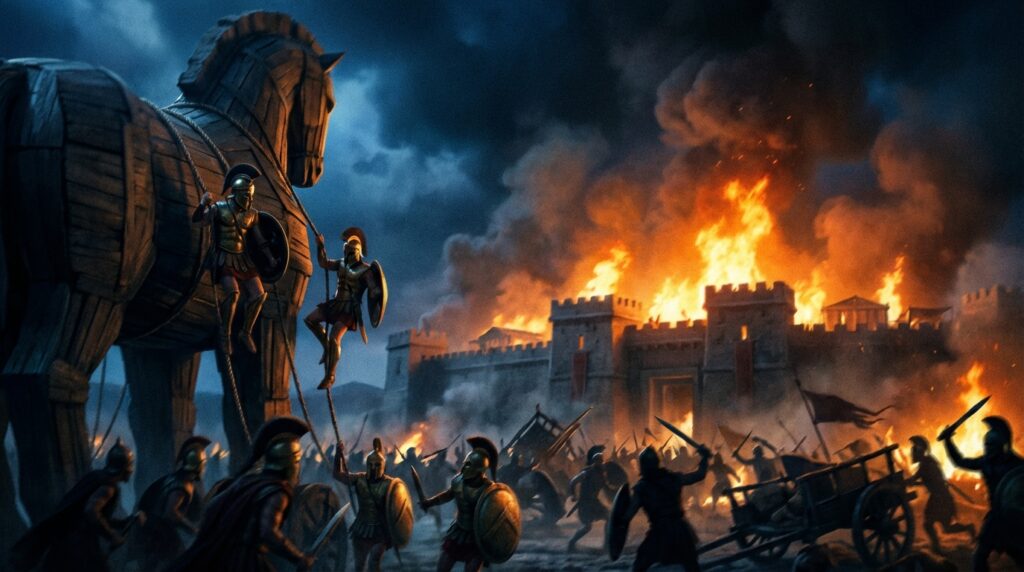
And then there’s the most grounded, yet equally devastating, theory: the Trojan Horse was a metaphor for an earthquake. Troy was located in an active seismic zone, and archaeological evidence points to significant earthquake damage in some layers of the city. Poseidon, the Greek god of the sea, was also known as the “Earth-Shaker.” It’s conceivable that a devastating earthquake weakened Troy’s defenses, allowing the Greeks to finally conquer it, and this natural disaster was later personified as a “horse” sent by the gods.
The Enduring Power of a Story
Regardless of its literal truth, the tale of the Trojan Horse has endured for millennia because it’s a brilliant story about cunning, deception, and the tragic consequences of hubris. It teaches us about the power of narrative and how historical events can be transformed and embellished over time, becoming legends that continue to captivate and provoke thought.
While we may never find the remains of a giant wooden horse, the archaeological evidence of Troy and the ongoing scholarly debate remind us that even the most fantastical myths often have roots in a very real and dramatic past.
References
Archaeology Magazine | World Archaeology | History.com | The Archaeologist