

If you’ve ever looked up during the fall or spring, you’ve probably seen them: long lines of geese or cranes stretched across the sky in a perfect “V” shape.
It’s one of nature’s most iconic sights, but have you ever wondered why they do it? It turns out, these birds aren’t just following a leader, they’re actually working together in a high-tech game of physics to make their thousands-of-miles journey a lot easier.
Catching a Free Ride on the Air
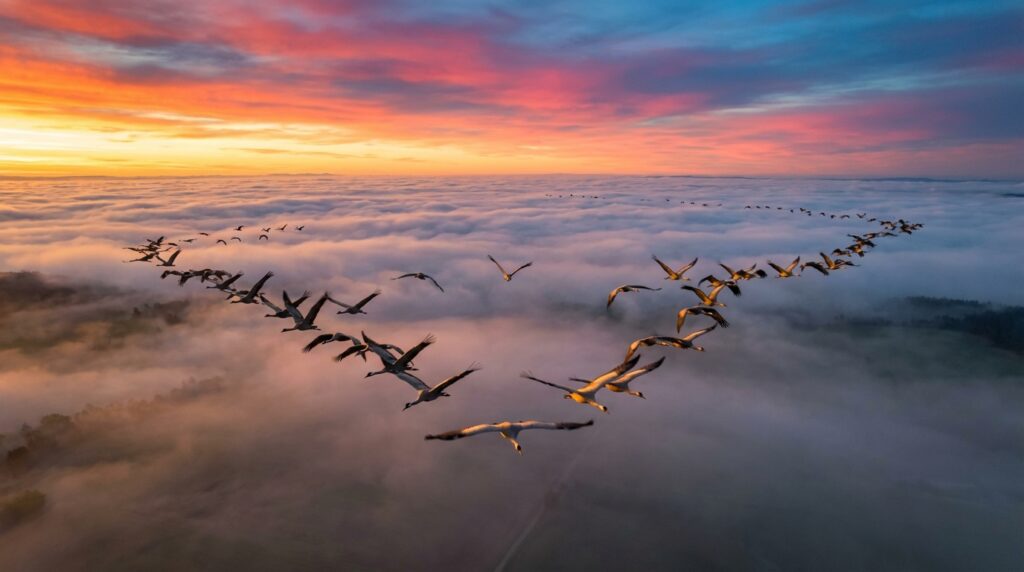
The secret to the V-formation is all about how air moves around a bird’s wings. When a bird flaps, it creates a swirl of air behind it. While the air directly behind the bird is pushed down, the air off to the sides actually moves up. Scientists call this “upwash.”
By tucking themselves just behind and to the side of the bird in front, the birds in the back can literally “catch” that rising air. It’s like getting a free lift, allowing them to stay in the sky with much less effort. In fact, some studies suggest that a flock of birds can fly over 70% further than a single bird flying alone just by using this trick!
It’s All in the Timing
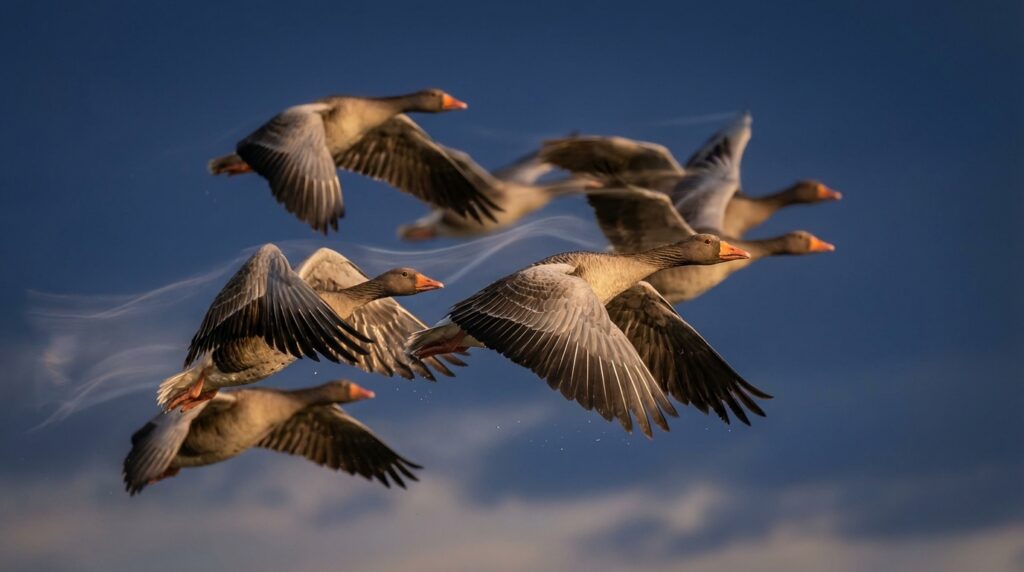
But it’s not just about where they sit in the sky; it’s also about how they move. A few years ago, researchers tracking a group of rare ibises found something incredible: the birds actually time their wingbeats to match the bird in front of them.
When a bird is in the “sweet spot” of the upwash, it flaps its wings in sync with the leader to maximize the lift. If they happen to fall directly behind another bird (where the air is pushing down), they quickly adjust their flapping to minimize the drag. It’s a level of coordination that would make a professional dance troupe jealous, and they do it all while flying at high speeds for hours on end.
Taking Turns at the Front
You might be wondering: what about the bird at the very front? Since there’s no one ahead of them to provide a lift, the leader has the hardest job of all. They’re the ones cutting through the wind and doing the heavy lifting.
Because the front spot is so tiring, the birds don’t just leave one leader up there the whole time. They actually take turns. When the lead bird gets tired, it rotates to the back of the formation to rest in the upwash of others, and another bird moves up to take the lead. It’s the ultimate example of teamwork, everyone does their part so the whole group can make it to their destination safely.
References
V formation – Wikipedia | Formation – University of Alaska | Nature | V Formation – NPR | University of Oxford