
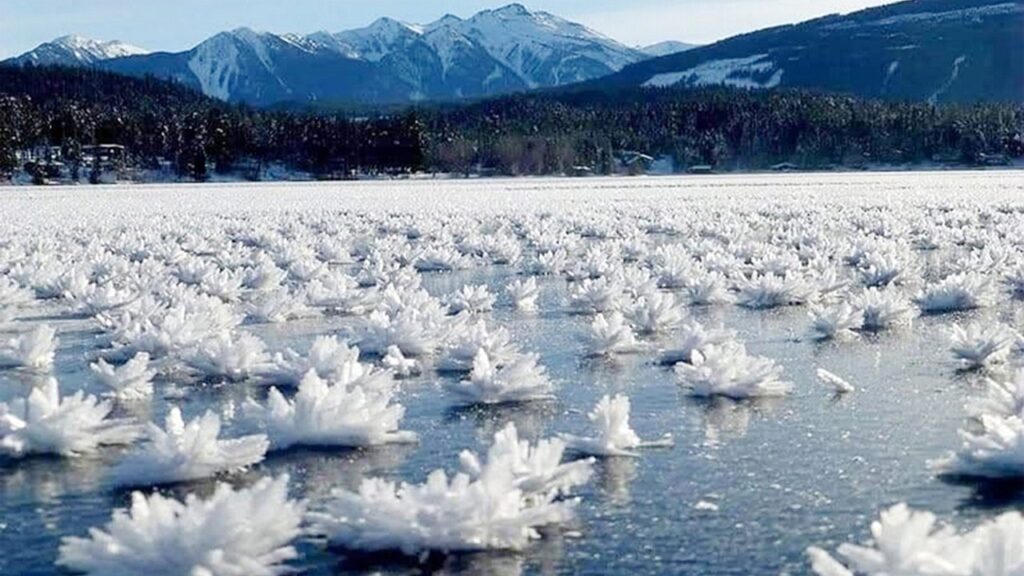
The Arctic Ocean is known for its biting cold, endless ice, and long winter darkness. It feels like the last place on Earth where anything resembling flowers could exist.
Yet in the heart of winter, when temperatures drop far below freezing, something beautiful and unexpected appears on the surface of the ice.
Delicate formations called frost flowers begin to grow, spreading quietly across the frozen sea.
They are not flowers in the usual sense, but their fragile shapes look so much like petals and stems that the name feels perfect.
See More: Fisherman Finds Rare Blue Lobster and Lets It Go
How Frost Flowers Are Born
Frost flowers form only when nature lines everything up just right. The air above the ice must be extremely cold, while the ocean water below stays slightly warmer.
As heat escapes from cracks in the newly formed sea ice, water vapor rises into the freezing air.
Almost instantly, that vapor turns to ice and settles into thin, spiky shapes that grow upward like tiny sculptures.
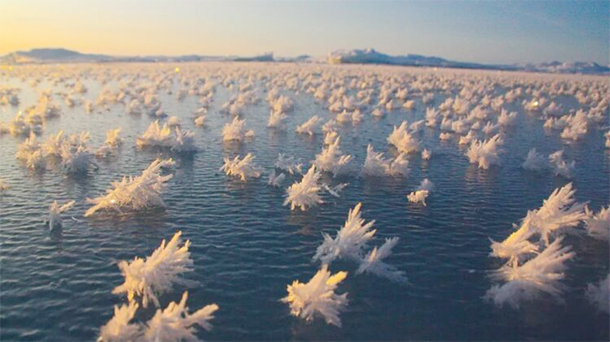
These icy blooms are incredibly delicate. A small breeze, a change in temperature, or even a light touch can destroy them. Because of this, they are rarely seen up close.
See More: Tiny Sunfish Grows Into Ocean’s Heaviest Bony Fish
When scientists do manage to study them, they find that frost flowers are rich in salt and minerals pulled straight from the ocean below, giving them a chemical makeup very different from ordinary ice.
Small Structures With a Big Role
Frost flowers are not just beautiful to look at. They play an important role in the Arctic ecosystem, especially during the harsh winter months when food is hard to find.
As they form, frost flowers release organic material back into the ocean. This material feeds tiny microorganisms such as bacteria.
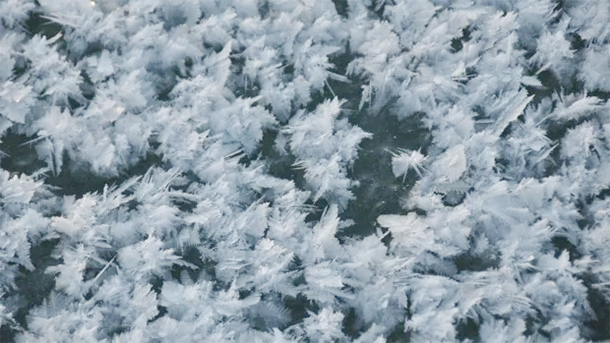
These microorganisms sit at the very bottom of the Arctic food chain. By supporting them, frost flowers indirectly help sustain fish, birds, and other marine animals.
Even in the coldest season, life continues to move through the ecosystem, quietly supported by these fragile ice formations.
See More: World’s Oldest Land Animal Turns 187 Years
Not Just an Arctic Secret
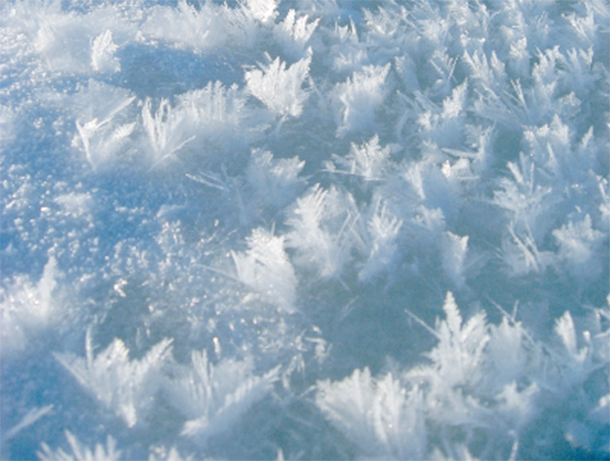
Although frost flowers are most often linked to the Arctic Ocean, they are not limited to one place.
Similar icy formations have been found in Antarctica and even in high mountain regions such as the deserts of Tibet and parts of the Himalayas.
Wherever the right mix of cold air and warmer surface moisture exists, frost flowers have the chance to appear.
Their presence in such different environments shows how adaptable and surprising nature can be, repeating the same delicate design in places that seem worlds apart.
Still Full of Mystery
Scientists have only begun to understand frost flowers in recent years.
Many questions remain about how they influence weather, ocean chemistry, and long-term climate patterns.
As research continues, these icy blooms are offering new clues about how life survives and adapts in extreme conditions.
See More: Shocking Orange Gator Stuns South Carolina
Beauty at the Edge of Survival
The Arctic Ocean may seem lifeless during winter, but frost flowers tell a different story.
They show that even in the most unforgiving environments, nature finds ways to create beauty and support life.
Quietly blooming on frozen seas, frost flowers remind us that resilience does not always roar.
Sometimes, it forms softly in ice, shining briefly before melting back into the world that created it.