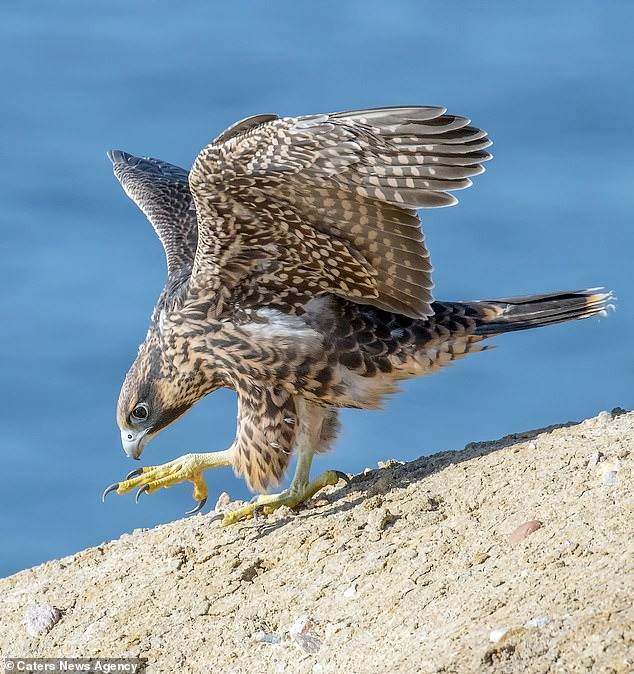
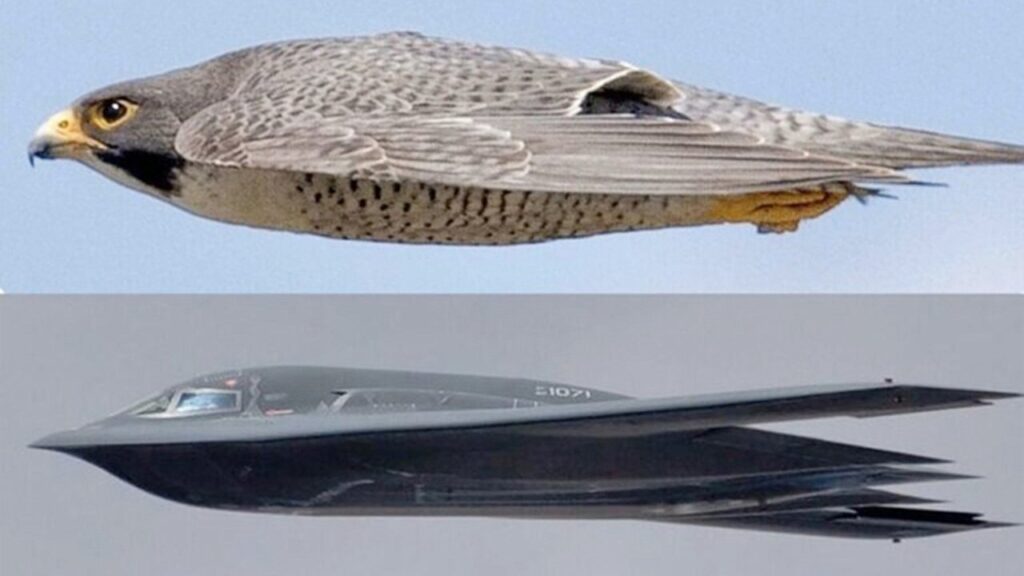
A striking photograph has captured a peregrine falcon in the middle of its high-speed dive, its body pulled into a sleek shape that looks almost identical to the famous B-2 stealth bomber.
Wildlife photographer Thomas Kaestner was the one who froze this thrilling moment in time, revealing how nature can unintentionally echo even the most advanced human designs.
See More: Woman Turns Old Boeing 727 Into Luxury Home
Nature’s Fastest Bird Shows Its Power
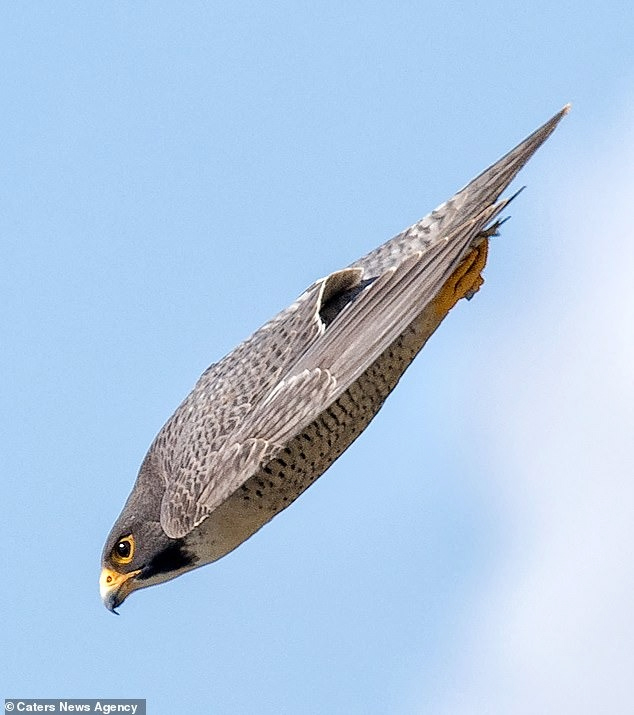
The peregrine falcon is known as the fastest bird on Earth, and the photo shows exactly why. When the falcon begins its hunting dive, it folds its wings tightly and forms a narrow teardrop shape.
This form helps it cut through the air with almost no drag, allowing it to reach more than 300 miles per hour.
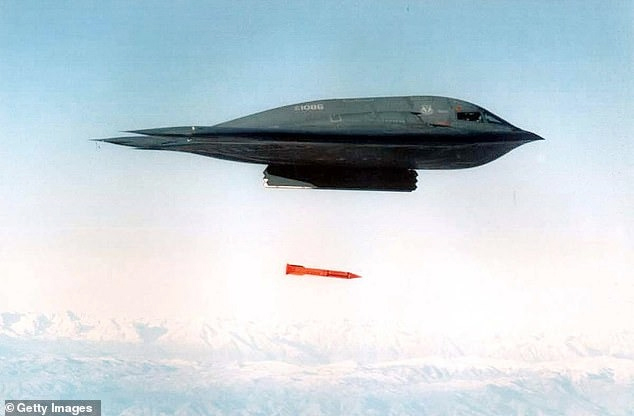
Its streamlined body looks remarkably similar to the smooth, sweeping outline of the B-2 bomber, a machine created for speed, stability, and stealth. In one frame, nature and technology appear to meet in the sky.
The Perfect Shot in the Perfect Place
Kaestner captured the photo in La Jolla, California, a coastal area known for its active population of peregrine falcons. He had been watching several birds when one began its powerful dive.
At just the right instant, Kaestner pressed the shutter and caught the falcon at its most aerodynamic moment. Against the open sky, its pointed wings and tightened body became a mirror of the bomber’s outline.
It was the kind of image a photographer dreams of but rarely gets the chance to take.
See More: Teen Turns $200 Camper Into Stunning DIY Glamper
Skill, Patience, and a Love for Wildlife
Although the scene lasted only a fraction of a second, the photo was not simply the result of luck. Kaestner’s years of experience prepared him for this moment.
Wildlife photography demands patience, quick thinking, and a deep understanding of animal behavior.
Kaestner compares it to a kind of gentle hunt, where the goal is not to harm but to capture a clean and powerful moment that tells a story.
His photograph does exactly that. It reminds us that the designs we admire in technology often reflect shapes that have existed in nature far longer. And sometimes, all it takes is one frozen instant to show how extraordinary those natural forms truly are.
See More: The Sun Isn’t Yellow, Stop Painting It Yellow